

Narrative
Events Around Faerûn
Amn, Tethyr & the Wealdath
See Narrative Introduction: Local Events.
Candlekeep

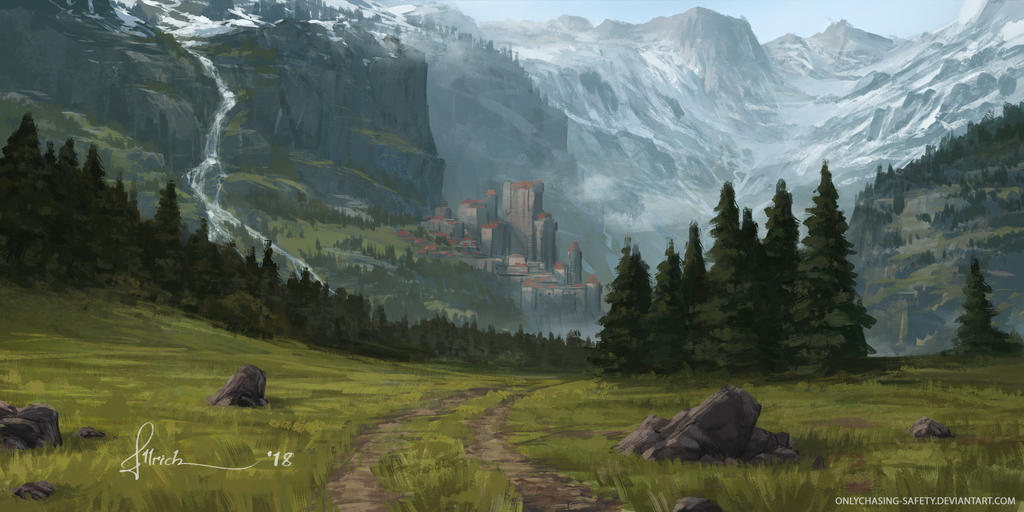
The famous library-fortress withstood the Longest Year, and, perhaps surprisingly to some, even thrived. The Sword Coast looked to Candlekeep for answers, and the longer magic's absence stretched on, the more people came in search of clarity, from lands both distant and near. Though countless visitors and aspirants proved fleeting and fickle, many nonetheless stayed behind with newfound purpose, dedicating themselves to the pursuit of truth and knowledge. This bolstered the numbers of Candlekeep significantly, bringing its importance to greater heights yet.
Over the next few years, not only would Candlekeep expand to keep up with its growing numbers and influence, but they also sent out hundreds of Avowed out into the world to further the research into the Longest Year. All the while, thousands of books, scrolls and various other texts of value were gifted to Candlekeep by the clueless and learned alike, in the hopes of hastening research and, hopefully, the return of magic. It was widely believed that the sages and scholars of the library-fortress were the world's best hope, despite their efforts yielding little results.
Faith in Candlekeep began to fade and dwindle in the face of lacking results, until in 1363 DR, an apprentice of Candlekeep proved to be the first to cast a spell - a cantrip - in years. Word of this spread like wildfire, and soon enough the smallest signs of magic pervaded all of Faerûn, spurring on a time of hope for some and a time of despair for others. Some saw the First Spellcasting as proof of Candlekeep having discovered a solution, and regarded it as a sign of progress. Droves of people began making pilgrimages to the library-fortress, deeming it a sacred site. This would continue for several years to come.
In 1365 DR, Alturiak, Candlekeep announced the Thirteenth Conclave of the year. The attendance was the highest yet, full of prominent emissaries and dignitaries, all hoping for the best of news. Much to their chagrin, Candlekeep speculated that the Weave may not return to what it once was, and subsequently encouraged the heads of countries and kingdoms to treat magic with appropriate caution and pre-emptive measures to combat rumoured mishaps and differences in functions of magic compared to before its collapse. The message of Candlekeep was misinterpreted by some of the attending parties with less sense than understanding, a skewed view that - in spite of Candlekeep's efforts to the contrary - would set in motion increasingly more cautious and restrictive laws and perception of magic in pockets across the continent, with hope replaced by wariness, a wariness that, when spiralled into paranoia by those with narrow minds or goals of power, would ironically come to caused more fatalities magic itself in the early years.
Candlekeep continues its diligent efforts, and though there have been fewer and fewer Conclaves ever since, some still hold out hope for the solution that never came, assured that the library-fortress and its sages will be their salvation.
Calimshan

Despite many challenges related to its underworld and tradition of slavery, and some political upheaval, Calimshan has managed to stay mainly stable, especially since the return of minor magic, and besides the one obvious exception of having lost a city, Almraiven, to a slave revolt.
Just like in Amn, the Shadow Thieves have come to an end in Calimshan as a result of the Time of Troubles and the following Dark Stalker Wars. Calimshan’s underworld was upended, and as a result, Ralan el Pesarkhal was able to rise to power and overthrow the Djenispool dynasty, exerting almost complete control over both the government and the criminal underworld of Calimshan. Through this day, he brings growth, prosperity, and strong national defense to Calimshan. As Tethyr stabilized in 1369, trade on the Trade Way has grown in the last six moons with both neighboring nations working on their relations slowly, but peacefully.
Unlike Thay, Calimshan fared much better at controlling and maintaining their slave populations through the Longest Year. Despite being outnumbered in most places, slave owners were able to use propaganda to keep the slaves divided just enough to avoid uniting. There were revolts here and there, the largest being in Almraiven in 1360. Little is known about what occurred there, but the revolt happened after the sinking of the Pasha’s Palace and the arrest of the city’s leadership, including its high vizier. In the chaos that followed, the slaves, with the help of some of those arrested, seized control of the city and its naval ships. The city has successfully remained independent since, though it suffers from its lonesome and unique position, forced to make hard choices that go against its goals as a bastion of the oppressed. Many of the former slaves struggle to adapt to a new way of life, countless still shackled in a mental prison of their erstwhile masters' making.
As for the state of magic in Calimshan, the Longest Year has meant change for the desert as well as the everyday lives of people, given the high amounts of magical gadgets in use in Calimshan. However, as a result, these objects and the Calimshites were some of the first to benefit from the return of magic. Meanwhile, the Calim Desert has become eerily quiet. The rumbles and winds that usually torment the sands have ceased, making repair and upkeep of the Trade Way through the desert one of the most important projects for Calimshan. More of the stone road is uncovered now than has been since the Shoon Imperium and despite the loss of magic protecting the road from dangers and increased banditry, the Trade Way is as safe and easy to travel on as it’s ever been.
The Moonshae Isles

The disappearance of magic had a smaller impact upon the peoples of the Moonshae Isles than most. Though many of its denizens were as shaken as any Faerûnian, the majority of the islanders were simple folk, and martially inclined besides. Many bided their time, watching the world with detached acceptance, while keeping largely to themselves.
In 1363 DR, a segment of the Iron Fleet raided the coasts of Alaron, the Korinn Archipelago and some of the Norheim Isles. While the Ffolk were content to simply repel the invaders, the enraged Northlanders took to their longships after chasing the Fleet back out to sea in the name of revenge and glory. This led to them targetting a great galleon captained by the lizardman warlord Zass'thirr. Though the Northlanders themselves sustained many casualties, they emerged victorious in the great sea battle and dealt a devastating blow to the Iron Fleet without even fully realising. Claiming the warlord's head, they returned home as conquerors, and the galleon was left in ruins.
Ever since the Moonshae Isles have known relative peace. The conflict between the Ffolk and Northlanders has been steadily waning in the face of a mutual threat, and though raiding and skirmishing still occurs to some extent, High King Tristan Kendrick has been hard at work in unifying the isles. Some hopefully claim that he will surely succeed in the years to come, yet feuds of old seldom relinquish their hold...
Waterdeep

The City of Splendors held its collective breath for the Longest Year. Though the city was home to very many mages that practiced freely, little of the infrastructure of the city was supported by magic. Due to its casual relationship with magic the city was nonetheless limited, and so both sent out and received fewer travelers from the Trade Way or the Sea. The naval presence of the Iron Fleet and Luskans did not help matters.
No major shifts of power occurred in the city during the Longest Year or since, though occasional earthquakes below the city as well as internal strife caused fleeting unrest in Alturiak of 1356 due to indecision and uncertainty around Candlekeep's request to increase restrictions of magic across the lands. Waterdeep adapted a similar stance to that of most cities, but not to the extent of Neverwinter or Amn nor with the zeal of the latter.
Now, the Lords' Alliance threatens to dissipate, with most of the merchant cities beset by both internal and external conflict. Though Waterdeep is better off than most, its direction is unclear in the face of the south and north alike experiencing ordeals of varying magnitude. Some speculate that Waterdeep will turn its attention south, whilst others hope they'll look to holding together the crumbling Lords' Alliance, yet the sheer scale of aiding each merchant city is said to be beyond the scope of any northern city, even Waterdeep's. All that remains is for people - both abroad and in Waterdeep - to see where the winds of change blow.
Yet some Waterdhavians keep a wary eye upon Luskan, concerned that escalation would see raids upon Waterdeep's trade routes on the sea extend further and further. Thus far the Luskan are only a small thorn of Waterdeep, but a thorn nonetheless.
Skullport

Due to the dampening of magic, Skullport’s portals closed in 1358-1358 DR. The mantle that assisted in the protection of Skullport was weakened and any physical passage into Skullport was impossible after the Longest Year concluded. Some survivors managed to escape the Port, however, the vast majority held out some hope that the tethers to the Weave would be re-established and remained behind. No contact has been made with Skullport since the Longest Year and explorers have been incapable of making contact with anyone who may be inside of the city. It is assumed the Netherese Mages (The Skulls) were killed off due to the dampening of magic and that the beasts maintained by Halaster were roaming free, unchecked.
Neverwinter

The City of Skilled Hands, as it was commonly known in the Sword Coast, plunged into a wariness greater than that of any other city in the North following the fall and return of magic. Having relied heavily on magic to protect itself from its warlike rival of Luskan and the orcs of the North, its citizens grew watchful on the verge of paranoia of an impending attack of a scale yet unseen. Many believed that the Lords' Alliance could no longer support one another with each merchant city facing its own troubles, and none were keen to put the notion to the test, when so much was at stake.
This pressured its ruler, Lord Nasher Alagondar, to invest profoundly in all things martial. This undertaking proved a tremendous success over time as the region was not only overfull with eager native youths, capable warriors as well as foreign mercenaries, but it also proved to have unanticipated natural resources that had remained untapped due to their former reliance on magical defenses and exports. Bolstered by reinforced numbers, time and again the Greycloaks repelled the orcish incursions of 1366 and onwards known as the Second Black Horde, which emerged emboldened by the Longest Year. The Luskans did not once encroach upon Neverwinter's lands again, much to the confusion, wariness and cautious relief of locals.
The longer the absence of magic stretched on, the more accustomed its people grew to the new status-quo. In time many among the citizenry and nobility alike began to give voice to a wide-scale assault against Luskan, taking its apparent silence and inaction against Neverwinter as either a sign of weakness or as one of impending doom. No such initiative against Luskan ever took root in a meaningful way in spite of calls to action, nor did Luskan yet fulfill any doomsayers' dire warnings of a secret, grand assault in the making. Some attributed this uproar to boastful patriotism, more bark than bite, though others muttered of a secret pact of peace between Neverwinter and Luskan to fuel the flames of animosity.
In 1363 of Alturiak, the first spellcasting took place, and with it came both fears old and new. Lord Nasher Alagondar, along with his compatriots in the upper echelons of society, were supposedly loathed to return to the old ways in the wake of their newfound success and growth in power. Some whispered that he was simply traumatised by recent events surrounding magic that apparently resulted in the death of his wife. Whatever the truth, the Lord heeded Candlekeep's universal request to increase regulations of magic with great eagerness and some would say even outright zeal, banning all public displays of magic and issuing harsh laws against "rogue" magi and divine servants alike - only those licensed were allowed to make use of magic in any fashion, and even then it was said that the Lord was distrustful of any that rose to prominence through the aid of magic.
These events gave rise to the Order of the Unblinking Eye, a sect of Helmites who perceived the return of unsupervised magic as a great danger to the world. The beliefs of the individuals within this order were often mere ignorance of nuances and any different way of life combined with a conviction in law above all, or of cold pragmatism that Neverwinter's apparent success gave life to, and yet others were fuelled by blind bitterness from loss at the hands of magic. Even paladins were known to be part of the cause, espousing more goodly and peaceful methods to achieve the same goals, effectively acting as the Order's mediators and steadying hands when zeal threatened to boil over. The Order swiftly became a recognised one within the city of Neverwinter itself, and its members came to be known as the de facto peacekeepers alongside the Greycloaks, supposedly with the quiet approval of Lord Nasher Alagondar. With the city largely secure and rooted in anti-magic beliefs after four years, some of the Order began to look outwards, carrying its agenda to lands bereft of anti-magic laws, as well as to those with already such rulings, to ensure that chaos and discord would not again take hold of such civilised lands - or so they claimed.
The common people of Neverwinter felt little negative change due to how long magic had already been gone, embracing their ruler's decision especially given the city's recent prosperity, deferring to his apparent wisdom on matters of statecraft. Neverwinter remains thriving, isolationist and relatively peaceful to this day, barring magical incidents and the handling of dissidents, of which there has been an increase in recent memory - for better or worse.
Luskan

The City of Sails had its fair share of strife, but also success, after the Longest Year. Its leadership was drastically altered: The Arcane Brotherhood - immediately severely weakened and nigh powerless - lost their tenuous grip on the city as each of the High Captains saw an opportunity to seize and attempt to claim absolute rulership for themselves, resulting in a year of civil war. Most of the Brotherhood were subsequently killed or banished in the name of either vengeance or pragmatism, forcing the remnants of the magi to scatter far and wide. A daring few bided their time in the shadows, waiting for their moment to strike, but the majority of the lingering vestiges of the Brotherhood left the north behind entirely, never to return.
Already infamous for a difficult way of life and its tendency of housing all kinds of scoundrels, pirates, and lowlifes, the Longest Year nonetheless managed to transform the city into an utter den of vice and survival of the fittest once the High Captains found common ground and unity once more, naming Beniago Kurth as the First High Captain. Despite this and the presence of the Ten Towns in Icewind Dale, Luskan was still considered by many to be civilisation's farthest reach.
Luskan had a history of waging war against lesser powers, both naval and land-locked ones. This warlike demeanour only became an increasingly prevalent trait of the city's, partially due to the High Captains being fully in charge, but also because of the sudden power those of martial inclination found themselves in possession of. After all, there was only an abundance of warriors in the north. Mirabar and the tribes of Uthgardt were the most common of victims, both prior and post the Longest Year, so that they would be kept submissive. The city of Luskan was once known to raid the lands of Neverwinter, its rival, and at times they even staged attacks on the city itself when feeling emboldened by recent triumphs, though none proved successful.
Though Neverwinter's recent prosperity forced the leadership of Luskan to err on the side of caution in any incursion that entailed committing large forces outside of the city, it nevertheless became common knowledge over the years that both cities evidently stayed out of one another's paths now, which sprouted many a rumour of secret pacts and invasions to be on both sides, yet none seemed to know the truth for certain.
The nearest merchant cities and other powers meanwhile found themselves either unconcerned by Luskan affairs or proved stretched too thin to oppose its continuous raiding and attempts at expansion. Waterdeep in particular was said to be far too wary of an attack by the Iron Fleet, should they have committed armies northwards, and few expected the Lords' Alliance to interfere as long the Luskans focused on the islands and northmost settlements.
In 1361 DR Luskan defeated Ruathym (not for the first time) after a large and bloody naval battle in the Trackless Sea. Intent on annexing the island this time around, their forces were forced to withdraw when faced with what seemed like it could become a war against the Moonshae Isles. The Northlanders appeared with a considerable fleet in the far distance, looming in the horizon. Some said it was only a show of force, a bluff, whilst a paranoid few were assured of imminent war, whispering of envy and greed that would surely see the Northlands wage war against the Luskans despite their retreat. No such war ever came.
In recent memory, Luskan has been harrying Waterdeep's sea trade and continues their oppression of northmost tribes, yet they've retained their distance from the Iron Fleet and Neverwinter, showing no signs of beginning hostilities against either. Though the future is unclear, one thing is certain: the city of Luskan tests its luck and the mettle of others, exploiting weakness where it is found.
The Silver Marches

The merchant cities' ordeals were similar to that of most kingdoms and countries, a path laden with strife and conflict.
Alustriel Silverhand, Lady of Silverymoon, vanished from her own tower. No one was able to say what happened or how, but the fact that the tower was vulnerable without magic surprised few in the end. The worst was feared, as Silverymoon fell into deep issues with its succession and ability to sustain itself without magic. While Silverymoon was weakened, the orc clans teemed and grew ambitious, leading to the rise of the Second Black Horde in 1366 DR.
Much of the Confederation's might has been consigned to fighting off the orc threat, which has enlisted goblinoid clans and even some of the Trollbark trolls to pressure from the South. There seems to be no end to the war in sight yet, and everything points to the Lords' Alliance taking less and less precedence, to the point of many in the North supporting abandonment of the coalition.
Hellgate Keep

The ancient elven city previously known as Ascalhorn continues to stand, and while the wards over it were greatly weakened and nearly reduced, so were the vile creatures inside. Any weak abyssals that have left the keep were handled more easily in the surroundings, leading to a slightly safer region even with the blight of the keep at its center.
Myth Drannor

The ruins of Myth Drannor were home to devils that remained after the closing of their portal by the Knights of Myth Drannor. With magic leeched from the world, the devils took few risks and mostly bade their time. The Knights and other adventurers that braved the ruins did so hesitantly. The land remained foreboding to casual travel.
Evereska

The Longest Year was considered a very dark time for Evereskan elves due to their strong connection to the Weave. Panic ensued in Evereska as their planar research was disrupted, releasing a few imprisoned denizens. Though weakened, they caused considerable chaos and casualties, highlighting the immense danger of extraplanar creatures even in the wake of magic's disappearance.
The elf-gates and portals became utterly inert to the present day, cutting off communications and contact with Evermeet.
The local Mythal ceased functioning, resulting in further injuries at the time due to common knowledge and practices no longer being valid, and the Mythal's shut down was followed by the permanent dissipation of the Walker in the Mists, a mist golem of Evereskans intended to protect elven lands. In its absence, the elves grew even more protective of their own kin, and began to perceive any and all encroachment upon their land with increasing paranoia.
Legend and rumour has it that a precious few dragons bore ties to Evereska, supposedly acting as the elves' intimate allies, though none among the People ever attested to these claims, internally or otherwise. There were no concretely proven sightings of such creatures in the region, and if there indeed was any truth to such hearsay, these dragons had surely vanished once and for all upon the Longest Year. The only source of supposed sightings once in a blue moon came from outlying human settlements, which elves were wont to simply dismiss as human ignorance and childish superstition, mistaking wyverns and other creatures of flight for the Ancient Ones.
The elves' own connection to magic, and its sudden disappearance thereof, gave away that Mystra had died. Most of the People expected life to return to normal in but a handful of hours, then it became days, weeks, and plans were drafted as further panic and worry set in, for magic had always played a very large role in the lives of Everaskans. This ancient tradition and core belief was now shaken and brought into question by some due to the dearth of magic, whilst deeply traditional elves contested such notions with zealous fervour.
After the end of the Longest Year, the Evereskans saw increasing amounts of trade at the Halfway Inn, with a small faction of the Hill Council pushing to open access to select merchants officially instead of just the Harpers, a notion that was and still is slow to gain any traction whatsoever, though the turmoil and uncertainty following the Longest Year inevitably fuels the appeal of unorthodox approaches even among the People. All the while the elf-gates and portals never showed any signs of regaining their magic, the Weave fundamentally damaged once again by (according to most in Evereska) human hubris.
The elves, having historically helped with the maintenance, tending, and healing of the Weave (particularly the High Mages), began sending out the People to inspect the damage while the mages, both abroad and in Evereska, in attempt to figure out how to heal the damage done. They have also been observing how the humans manage post Longest Year, keeping tabs on the political atmosphere in fear of the worst - conflict between the People and humans.
Cormyr

Unlike many other regions of Faerûn during the Longest Year, the bustling and prosperous Land of the Purple Dragon has only strengthened and grown while under the rule of King Azoun IV. Like other regions, there were some difficulties, but they have been overshadowed by an increase in martial might, massive population growth, and acclaim for the King’s involvement in fighting back the Tuigan Horde in 1360 DR.
The sudden loss of magic did cripple the War Wizards, which led to tensions between families, city lords and the Crown, as those who relied on their protection became paranoid. However, aggression was avoided thanks in part to the Crown’s efforts to boost and prompt the Purple Dragons as a martial organization above all, proving once more the Crown’s ability to keep the country stable and prosperous, even through a time which has been disastrous to many neighbours. This is a large part of the population increase, as trade, labour, and immigration from all over North Faerûn flocks to Cormyr as a place where one can build a more normal life. Small hamlets and villages are growing into towns, and the cities are busier than ever before. For now, the population increase has been sustainable, besides some conflicts between new and old Cormytes.
As Cormyr thrives, the War Wizards are hard at work studying the loss and subsequent return of magic, the effects of the Longest Year and the volatility of returning magic. Most in Cormyr, having seen magic as a central part of its society, are welcoming of its return, but because of its unpredictability there are now more rules in place to control its usage.
Other ongoing and significant events include the rise in Tymora’s faith, Cormyr’s support of Halath Tymmyr in Sembia to encourage unification and regional economic stability, and an ongoing, yet tense, alliance with the Zhentil Keep which has allowed Cormyr to keep the Zhents out of the Dalelands and to provide aid against the drow invasion using Tilverton as an assembly point.
Sembia

The decade long civil war that followed became known as The War of Crimson Coin from the sheer suffering wrought in the name of wealth and power, as well as the many mercenaries employed. Countless local commoners would take up the sword, many simply striving to make ends meet, finding no other recourse in the midst of war, others latching onto romantic tales of the sellsword's life ensuring glory and wealth, spurred on by the increased might of the martial way of life in the wake of the Longest Year.
At first the conflict natives, but foreign mercenary bands and other groups gradually themselves, each hoping to carve out a slice of Sembia for themselves or whoever they represented. While various groups had some measure of success, few managed to held onto the lands and cities they held for long.
By 1370 most of the Merchant Council lay dead, and the few remaining survivors desperately fight to hold onto what they control. An exception among them is one Halath Tymmyr, self-proclaimed Overmaster of West Sembia, who has been steadily consolidating power since the beginning of the civil war, now controlling all of the land from the western border to Selgaunt. Everything north of river Arkhen remains contested, largely regarded as a No Man's Land. Many believe Halath Tymmyr will soon take control of all Sembia, and many would also welcome it, in the hopes of an end of bloodshed and a better tomorrow.
The Dalelands

Considering the Dalelands were located at a crossroads between a number of different powerful human nations and city-states, the fact their lands had always been brought to the attention of a several of the Realms' most influential powers came as little surprise.
Yet with the onset of the Longest Year, the attention of would-be conquerors and meddlers waned until none looked to the Dales with nefarious intent, far too occupied with their own troubles, or with their eyes set upon greater prey.
Unlike most, the Dales prospered on all fronts in spite of magic's absence. Trade had always been an important, and often unifying, force among the various dales, and this became doubly true with most of the Dalelands' neighbours proving unable or unwilling to trade. The towns grew increasingly dependent on one another, and though some old grudges and rivalries yet endured, they were set aside for the time being.
What was once strictly a loose confederation of small towns swiftly neared the point of unifying as a kingdom of one. Talks of unity spread significantly, with earnest support from most in the hopes of keeping out the dangers of all that the Longest Year had wrought outside of the Dalelands. Yet before anything could come of such prosperous times and hopeful talk, the Dales were abruptly thrown into the clutches of chaos in mid 1368 DR.
Scardale, Featherdale, Tasseldale, Deepingdale and Archendale all fell in quick succession one after the other, succumbing to drow invaders that had seemingly sprung up out of nowhere under the cover of night. The brutal invasion became known locally as The Night of Black Knives. Rumours initially marked the offensive as a Zhentarim invasion, but survivors that flooded into the northern parts of the Dales swiftly disproved this. By the time adequate defenses were mounted, half of the Dalelands had already been conquered.
Rivers Ashaba and Duathamper have become the Dales' warfronts, the forces of Battledale, Mistledale, Daggerdale, Harrowdale and Shadowdale on the northern side, and the drow on the Southern one. High Dale remains distant and uncaring, assured in the protection of Cormyr. Hearsay has it that the Land of the Purple Dragon - now freed from the Tuigan warfront - looks upon the Dales' plight, intent on aiding them. Supposed sightings of Cormyrian armies heading toward the Thunder Peaks spread in the region, in a message of hope, though not all put stock in such claims in the absence of official word from Cormyr. All the while the Northern Dales have been joined by the elves of Cormanthor, in concert with Dalelands heroes and armies warding off the bulk of the drow... for now.
The Moonsea

As the months of the Longest Year stretched on, the first major upheaval to happen was the coup in Hillsfar. With its powerful and xenophobic wizard-ruler rendered helpless, Zhentarim agents quickly moved in to coax the mercenary Red Plumes that served him.
The Black Network used both threat and bribery to sway the Red Plumes, who eventually were coerced into slaying their former employer, giving the city over to the Zhentarim. Soon after, the company mysteriously lost many of its key members, and those that remained naturally splintered into various smaller groups to spread about Faerûn.
As this was happening, another betrayal took place; Manshoon, ruler of Zhentil Keep, was slain by Fzoul Chembryl in 1362 DR, who in turn assumed control of the fortress city. Few challenged this, for many saw this as the will of Bane. Thereafter, the Zhentarim army marched upon Phlan, which was promptly overran and occupied, and the Pool of Radiance there was discovered to be no longer anything but plain still water.
Now more than ever, the Moonsea cowers in the shadow of Zhentil Keep. Only Melvaunt and Thentia remain in defiance, but there is an ever-present and palpable sense of dread in the hearts of their peoples, as they fear what may come.
Damara
Due to their failure in the Battle of Goliad, Damara came under the power of the Kingdom of Vaasa. The Northern provinces of Damara were deserted and the refugees fled to the South of the kingdom. During this time, the Kingdom of Damara was non-existent, as it became a land for a few dukes and barons independent from each other. These independent leaders were forced to pay tribute to Vaasa and acknowledge the power of their Northern neighbour.
However, in 1359 DR, Gareth Dragonsbane was victorious over the Witch-King and successfully united Damara, earning the crown of the kingdom. The Longest Year's shadow fell over the Cold Lands thereafter.
Though this proved a strenuous period for Damara - having to rebuild the kingdom and its army in the face of a changed world - Damara was nonetheless steeped in stalwart faith and unshaking hope for the future. They had, after all, stood against the Witch-King on their lonesome and persevered despite neighbouring Impiltur and Narfell's refusal to aid them on the grounds that they had their own problems to deal with. Many of the people held them in contempt for this, but in time King Gareth's public appeal to the masses - of forgiveness and unity - alongside internal efforts saw grudges dissipate, though tensions remained strong between Damara and Vaasa.
The forming of the Compact of the Triad followed, a coaliation of both necessity and hope between Damara and Impiltur, in which the Forgotten Kingdom would pay reparations for their inaction, hastening Damara's recovery. Though Damarans were initially apprehensive of the Compact and some even voiced vehement opposition, surprisingly many in the end embraced the union with open arms - whether out of pragmatism, fear or benevolence.
Forming a stalwart barrier against the Tuigan Horde in the North Eastern reaches of the world, the Compact has nevertheless been limited in its offense, unable to completely push back the Tuigan. The war against the invaders has now shifted to the Northern and Eastern borders of Narfell and Northern Rashemen, the Horde neither retreating, nor gaining more ground for the moment, as the Compact and its allies keep the Tuigan at bay in what is essentially a stalemate. The support of distant lands has ceased altogether, many kingdoms and countries believing the Compact to have the North East's protection well in hand.
Over the decade of King Gareth's reign, the fortunes of Damara have seen their peak, and the worship of the Triad - already prominent in the region - has become the domineering faith. Despite the ongoing war effort in the North East, the last of stragglers of Zhengyi's forces are slain, ensuring peace within Damara's own borders. All the while a great many rumours brew of Damara preparing to annex Vaasa, though equally many dismiss such claims as inane babble due to the implied logistics of annexation in the midst of war.
Impiltur

While the Forgotten Kingdom had always nurtured mercantile relationships, it had also long maintained an isolationist approach to the political and military disturbances that had risen in the East. The ruling monarch was often quite hesitant to place their trust in other realms, and its people maintained a collective frontier spirit of self-determination and independence.
Much of this would change with the coming of the Longest Year. The Tuigan Horde, bolstered by the inadvertent momentum the Sellsword Age blessed them with, posed a greater threat than the era of upheaval itself. The national sense of altruism and selflessness inherent in Impiltur's people compelled the Lords of Imphras II to act - not only for themselves, but also for the kingdom's immediate neighbours.
With a common foe on the horizon and past mistakes to atone for, namely the abandonment of the Cold Lands in their war against the Witch-King, Impiltur formed an unexpected alliance with Damara, in which the Forgotten Kingdom would pay reparations for their inaction, hastening Damara's recovery. It became known as the Compact of the Triad, and though Impilturans looked favourably upon the union, it was speculated among some circles that Damara was less happy with it. Fears of old grudges fracturing the Compact were vocal, yet no such fracturing ever came to be.
Forming a stalwart barrier against the Tuigan Horde in the North Eastern reaches of the world, the Compact has nevertheless been limited in its offense, unable to completely push back the Tuigan. The war against the invaders has now shifted to the Northern and Eastern borders of Narfell and Northern Rashemen, the Horde neither retreating, nor gaining more ground for the moment, as the Compact and its allies keep the Tuigan at bay in what is essentially a stalemate. The support of distant lands has ceased altogether, many kingdoms and countries believing the Compact to have the North East's protection well in hand.
Within the realm of Impiltur itself, the Earthspur and Earthfast Mountains have known a period of eerie peace. The Hobgoblin Menace - as natives are wont to call the goblinoid plaguing their land - appear to have withdrawn into the darkest and deepest of tunnels, scarcely showing themselves even in the tallest peaks of the mountains. Though the Warswords retain watchful vigil over the Forgotten Kingdom, few in the realm seem concerned of the sudden disappearance of their ancient enemy.
On the whole Impiltur has regained much of its former importance among the lands of the East, and the worship of the Triad had steadily spread to the Cold Lands and further yet in the wake of the Longest Year, and continues to do so. A prosperous and wealthy kingdom, with a strong ally by its side, the future looks bright for the defenders of the North East, some of its neighbours even seeking to become part of the Compact.
Rashemen

The Land of Berserks felt the absence of magic keenly, for its spirits fell utterly quiet in what became known as The Great Silence among the Wychlaran and Durthan alike. Once mighty and fearsome witches, they found their power greatly diminished, though they still retained respect and influence in places firmly rooted in old traditions. Without the open answer of spell or spirit, many continued to prove useful to the Rashemaar, serving as spiritual advisors, herbalist healers, keepers of rites, household authorities, and counselors in matters both sacred and mundane.
Meanwhile, the berserk warriors of the land - now the foremost bulwark against the outward world - rose to unprecedented prominence, and the Iron Lord, Thydrim Yvarrg, was quick to grasp what The Great Silence had made evident: the authority of the Wychlaran, though still deeply rooted, had become newly contestable. Where his predecessors had been checked, guided and constrained by custom to govern in concert with the witches, Thydrim pressed against those cultural bounds by force and became the one and true leader of Rashemen, ruling increasingly by his own hand.
Intent upon the destruction of the Red Wizards now that the world had changed. Thydrim decreed the land's Southern borders and berserker lodges reinforced in both numbers and fortifications. Some among the Rashemaar believed only the annihilation of their hated foe would restore the spirits of the land as well as the natural order of the known world, casting all blame upon Thayans, assured of their guilt.
Such precaution - whether borne of false beliefs or not - proved a tremendous boon when the Tuigan Horde began their abrupt invasion of the East in 1359 DR. Though an invasion of Thay was out of the question, it was clear to all that Rashemen would have surely fallen without the Iron Lord's apparent prudence, yet despite the valiant efforts of the berserker armies, Citadel Rashemar fell to the might of the horselords, followed by much of Southern Rashemen succumbing to overwhelming force.
The Iron Lord and his armies nonetheless managed to ward off the Tuigan Horde long enough to ensure their people's survival, as the Tuigan were forced into a retreat that saw their vast armies relocate from Rashemen, Thesk, and Thay, to the North Country; the Eastern borders of Narfell as well as Northern Rashemen, where they would remain for the unforeseeable future.
With the return of magic and thus the Wychlaran regaining their power, the old balance has begun to reassert, although Thydrim is guarding as much of his increased authority as he can. Some worry that the potential disunity will leave Rashemen weaker, not stronger, against external threats. Ever since the Rashemaar have felt a change of heart in regards to the cause of the Longest Year, and though The Great Silence appears to be over, the Rashemaar have embarked upon many a pilgrimage to foreign lands in search of answers to the Weave's dearth, firmly believing that only due diligence will ensure the continued presence of both magic and the land's spirits. Pairings of Wychlaran and berserkers become a more common sight than ever all across Western Faerûn, sparking curiosity and wariness alike among foreigners, though little proves to deter these seekers of truth.
Meanwhile in Rashemen, skirmishes along its Northern borders grow scarcer and scarcer with the Tuigan Horde's focus lying almost wholly upon the Compact of the Triad (Damara & Impiltur), and few Rashemaar believe the Tuigan to be a true danger now that magic trickles back into the world. Yet with it comes tensions also, between the Wychlaran and the Iron Lord, many of the witches and supposedly even some of the berserkers wishing to return to the old ways...
Thay

The Land of the Oppressed had been embroiled in brutal civil war ever since the beginning of the Longest Year. The infrastructure of the Red Wizards was in shambles with magic's absence and though they managed to still manipulate and fool monstrous troops into believing their power was intact, they quickly lost control of most tharchions. Some vied for control of the divided land in the same vein as the Red Wizards, while the majority sought to free the land from oppression and slavery. The slave uprisings, though divided and directionless, saw no end until the slaves and the Red Wizards were forced into an uneasy alliance in the face of likely annihilation at the hands of the Tuigan, in 1359 DR.
The Tuigan Horde was nearly unstoppable. Not relying on magic so much as numbers and martial prowess and tactics, they overran the Northern tharchions of Thay and continued into Southern Rashemen, as both the Red Wizards of Thay, their people, and the Witches of Rashemen were too weak to fully stop them.
By 1363 DR, Aglarond shored up its Eastern defenses at the Watchwall in anticipation of the worst, and Thesk received aid from the Compact of the Triad (Damara & Impiltur) and more distantly Tethyr, Amn, and Cormyr, to repel the Tuigan Horde. Refugees of the Horde filled not just Damara, Impiltur and Cormyr, but further lands. The Horde soon retreated from Rashemen, then Thesk and Thay, instead focusing on the armies of the Compact that evidently posed the greatest of threats in the region.
Now the war front has shifted to the Northern and Eastern borders of Narfell and Northern Rashemen, the Horde neither retreating, nor gaining more ground, as the Compact and its allies keep the Tuigan at bay in what is essentially a stalemate. Meanwhile the support of distant lands has ceased altogether, many kingdoms and countries believing the Compact to have the North East's protection well in hand.
The people's tenuous pact with the Red Wizards has since fallen into disarray, many of the magi having been hunted down and hung from the ramparts of their erstwhile keeps and fortresses - no mercy or forgiveness to be found among the liberated masses. Bloodshed borne of revenge and justice has driven many of the freed people to flee for calmer lands, while some simply attempt to distance themselves from their arduous pasts. The land of Thay, as of 1367 DR, is under the rule of a unified slave populace, led by Oronkhor the Unforgiving, a former slave among many who orchestrated many of the killings of Red Wizards and their most loyal of servants. The remnants of the magi have supposedly scattered and now reportedly operate independently in small cells or cabals with no unified base.
Chessenta

The Time of Troubles was tumultuous for Chessenta. It began with a war between the cities, and ended in an uneasy alliance against Unther. The rise and subsequent fall of Tchazzar and the defeat of King Hippartes of Akanax left the war-torn cities of Chesssenta independent upon the sudden arrival of the Longest Year.
The Longest Year brought on another series of violent wars, ending in unification and the rule of Over-Queen Idrane, who led Chessenta out of war and into peace and relative prosperity, from 1363 to the present.
The wars during The Longest Year began because House Karanok, leaders of Luthcheq, and notorious mage-killers were suddenly “god-less” with the onset of the Longest Year and the loss of Entropy. Without the fear of their power, the crazed family was disposed of by assassins from Mordulkin. The war-like city of Akanax pounced on the weakness in Luthcheq. This devolved the already battered region into another war, with Akanax, Cimbar and Mordulkin on one side, Luthcheq and Soorenar on the other, and Airspur not joining. In less than a year, the aggressor, Akanax led their side to victory, however, the death of King Gormantor of Akanax left the alliance led by Sceptanar Idriane of Cimbar who was declared a war hero and took the title of Over-Queen of Cessenta.
As a result of Idriane’s leadership; philosophy, art, astronomy, and athletics surged through the region - though Akanax generally remained a very militant city and the backbone of the nation’s defense. Trade and populations bloomed across Chessenta and the beautiful and clean cities brought travelers from across the realm. Slavery still continues, with most of the slaves being elves, however their numbers remain fewer than other nearby nations and eventual freedom is not uncommon. Despite the deaths of the Karanoks and the widespread population of mages in some cities, casting magic was still treated uneasily in many places due to its now uncertain nature. One exception was Soorenar, where mages tend to get away with far more without persecution.
Lapaliiya

During the protracted Longest Year, the collapse of trade led to overflowing warehouses of decaying inventory. Despite rumors that they had planned the crisis, the Rundeen Consortium intervened with trade and credit solutions, but this proved ineffective to reinvigorate trade and the secular authorities were blamed for it. As the street preachers took control of the churches and reshaped them in their image, the pact between them and the Old Fathers broke: they wanted all the power to also reorganise society. It was the beginning of what would come to be known the "Lapal Civil War."
This conflict mostly took the form of power struggles and urban unrest. The once-powerful individuals criticized the Civil War period as the "Years of Rot," noting the widespread corruption that plagued their institutions and the smell coming from the festering goods within warehouses. Bolstered by reformed churches and popular support. Meanwhile, the Street Saints proclaimed them the "Years of Cleansing," a time for zealous purification.
Under Sorcerer Overking Mhartuk, only the city of Sheirtalar retained peace, yet his influence scarcely reached beyond his own palace walls. The preachers that now controlled the various churches saw the resurgence of magic in 1363 as a sign from the Gods; the Zealot Churches began to take over most cities, changing the old theocracies completely. In place of the city's formerly tolerant civic patronage, which promoted harmony, harsh penalties were implanted for worshipping any other deity than the designated civic patron. By using their shifting loyalty to create a growing trading monopoly, the Rundeen stood as the true victors.
Those who practiced arcane magic faced unexpected persecution as a result of its resurgence. The unprecedented hostility toward mages after the Street Saints' takeover was preceded by centuries of suspicion and church oversight. Survivors frequently joined criminal gangs or simply left the Confederation altogether. Others banded together in a form of resistance against persecution, but their actions quickly turned to overt violence as they found unlikely supporters in some of the snakefolk that still roam Lapaliiya.
Overking Mhartuk's death by poisoning in 1368 became the ultimate propaganda weapon. The Zealot Churches, in their attempt to unite the people, broadly accused all arcanists of being snakeblooded yuan-ti agents intent on Lapaliiya's collapse. Pogroms became widespread and violent as neighborhoods fell apart. Sheirtalar's tolerance was preserved by the accession of Prince Shaliim Wyrmslayer in 1369, but by this point the confederation essentially only existed in name. Each city had become the domain of its own charismatic clerics, powers in their own right, many of which suffused their sermons with undertones that bred paranoia and worked against tolerance. All significant trade and criminal activity was dominated by the Rundeen.
Many persecuted arcanists were eventually drawn into the service of the serpentfolk (whether they realised they were dealing with the Yuan-Ti or not) by the promise of a future magocracy, no matter how illusory, and they also witnessed the confederation disintegrate into separate, fear-based fanatical theocracies that were united only by a dislike of magic, snakes and each other. Rumors of brewing a religious war between the cities is what keeps most people away from the Cities of the Seabreeze.
Halruaa

Maztica
As it became apparent that magic showed no signs of returning, a group of high-ranking officials of the Church of Helm in the Sword Coast began to take advantage of their influence and position to provide those things to the people of the Sword Coast and beyond by commencing advocation for growth of their religion into Kara-Tur, vying both to secure and inflate their position within its ranks and expand the Church’s reach across the known world.
The Church of Helm applied continuous pressure for missionary expeditions into Kara-Tur, secretly forming alliances with powerful merchants and influential nobles in an attempt to bring their plans to well-funded and supported fruition over the following few years. This led them to a man named Cordell, who boasted impressive expeditionary and militaristic feats with his mercenary company. Gifting him their sponsorship, they prompted him to request funding from the Council of Six to lead an expedition to the True World in the name of their cause. Given the wide-spanning chaos that The Longest Year has left in its wake, mundane trade routes had become even more crucial than ever, leaving the Council little choice but to agree to the outlandish proposal out of respect for their slowly draining coffers.
Along with Cordell’s mercenary group, the Church of Helm sent a group of especially fervent, unwavering and loyal soldiers - a vanguard that could carry out tasks and complete objectives far beyond the ability of others - to join Cordell on his expedition to Kara-Tur. These crusaders, the Companions of the One True Vision, were tasked with spreading the religion to the continent, recording their encounters with the Kara-Turans and cataloging both foreign treasures and untapped resources they came across during their journeys. Although the journey was arduous (and the losses at sea much greater than they may have normally been due to the lack of magic to aid them), during the winter of 1361 DR, the expedition "discovered" far-off Maztica.
The Companions of the One True Vision, incited by the zealous and fanatical words of faith from their superiors, and believing that they were delivering the will of Helm, became the driving force in a multitude of barbaric atrocities committed upon the natives of Maztica. Despite the discovery of Maztica forcing them to deviate from their original mission, they were determined to spread the influence of the Church to this new world. Unable to communicate with the majority of the natives of Maztica, they exterminated a significant number of them who either could not understand or would not comply with their "teachings" in Helm’s name. These cruel and relentless acts would continue for several years as they remained in Maztica, keeping records of "vile, unjust, demon-like natives" and "ritualistic worship of savage, destructive gods."
In 1362 DR, the precarious balance in Maztica between the natives and invaders was irrevocably shaken following an assassination of the natives’ leader, Naltecona, in the Maztican capital of Nexal by Cordell’s traitorous lover and lieutenant, Darien. The native Nexalan warriors declared all-out war on the mercenary group who were currently stationed within the city. The two forces brutally clashed but, as if by fate, the gigantic volcano Mount Zatal erupted, spewing forth a torrent of molten rock and ash that lit up the night sky like a malevolent sunrise. As pyroclastic flows raced down the mountainside, rivers of lava snaked through the city streets, causing the city’s majestic pyramids to crumble, and the very ground beneath Nexal to sink, allowing the lakes that supported the city to swallow it whole. The cataclysmic result was the ancient city’s total devastation, leaving very few survivors on either side of the immense conflict.
Upon hearing the news of this, the Church of Helm framed this natural disaster as an absolute victory in the name of Helm and all the people of the Sword Coast over the native "devils," declaring Helmsport as the capital of what they referred to as "New Amn."
Over the following years, between 1363 and 1369 DR, the Golden Legion and the Flaming Fist Mercenary Company established new colonies and forts in Maztica, amidst conflicts and tensions with local populations and among colonial powers. Trade disputes, failed explorations and attacks from natives and Sahuagin plagued the settlers.
Meanwhile, Waterdeep and Amn competed for trade supremacy, with suspicions of sabotage affecting maritime expeditions on both sides, culminating in the destruction of the recently constructed New Waterdeep by Kultakan invaders during a volatile power struggle in the region over its absurdly rich resources, which continues to the present day.
Mainland Amn - particularly Northern Amn - all along received regular shipments of Maztican spoils and riches in appeasement of the Council of Six, but not all made it through the newly Iron Fleet infested waters, and as time went on these voyages were forced to land farther South and continue on through land to evade the wrath of the monstrous fleets. With the rumour of the true actions of the Helmites in Maztica finally working its way back to the people of the Sword Coast, the Church of Helm sought to make amends by scapegoating the Order of the One True Vision. Although its members were not excommunicated, they were recalled from Maztica and their order was permanently disbanded, and Its former members were scattered across the Sword Coast performing reparations and missionary work in disgrace and relative obscurity.
Evermeet

Any and all high magic elements either never happened or vanished in the wake of TLY, for example Evermeet spelljammers were never a thing for us. No kraken protectors or w/e. There were dragons living there, but very rarely sighted, and it's preferred people don't incorporate their existence too heavily into their backgrounds. They've left the island since TLY, yet to return.
All the illusion magic that shielded Evermeet is completely gone and has resulted in sahuagin incursions along the coasts, which continue to this day. They've also attacked the Evermeet fleet far more brazenly and consistently since. There's general wariness that the Iron Fleet may set their sights upon Evermeet now that any and all can find it, and their blockades and general presence on the Sea of Swords has prevented easy access to the closest elven realm, the Wealdath, and Northern Faerun.
The elves largely used magic for both communication and travel, and since its disappearance, they've had to adapt and start sending emissaries and couriers to the mainland, always skirting around the dangers of the Iron Fleet by sailing southwards, often to the shores of Calimshan, to be able to contact the Wealdath, Evereska, etc.
Generally there’s a want and call for unification of the People more than ever now, though the powers that be in Evermeet don’t always agree with one another on how that ought be done. Many still want the other elven realms to ‘return to the fold’ and become one with Evermeet by leaving behind their realms on the mainland, and others preach that maintaining close contact and outposts, embassies, is more vital than ever. Both camps travel to the mainland in the hopes of furthering their respective goals, in the name of the People.
The nearby sea elves have become even more reclusive and rarer to sight, which is attributed to the sahuagin menace, but some still visit Evermeet for the sake of trade and maintained contact with their cousins.
The divine stone, wood, and magical construction in general that elves rely on and that Evermeet was built on started to deteriorate and weaken slowly, and still are in spite of magic's return. It was initially presumed magic hasn't returned fully enough. Evermeet has adapted by reinforcing existing structures through mundane means, resulting in frequent trade with the Southern human realms, though many sun elves wish to wean off of this human reliance and establish elven sources in the mainland.
The maintainers and creators of Evermeet are known as The Architects, Evermeet’s equivalents of Treesingers, that dedicate their lives to mastering an art known as The Shaping - mixing the arcane and divine - in magical creation and blending of stone, crystal, and much more, out of which most of the island’s civilisation is made.